Italiano
 Français
 Deutsch
 Switzerland


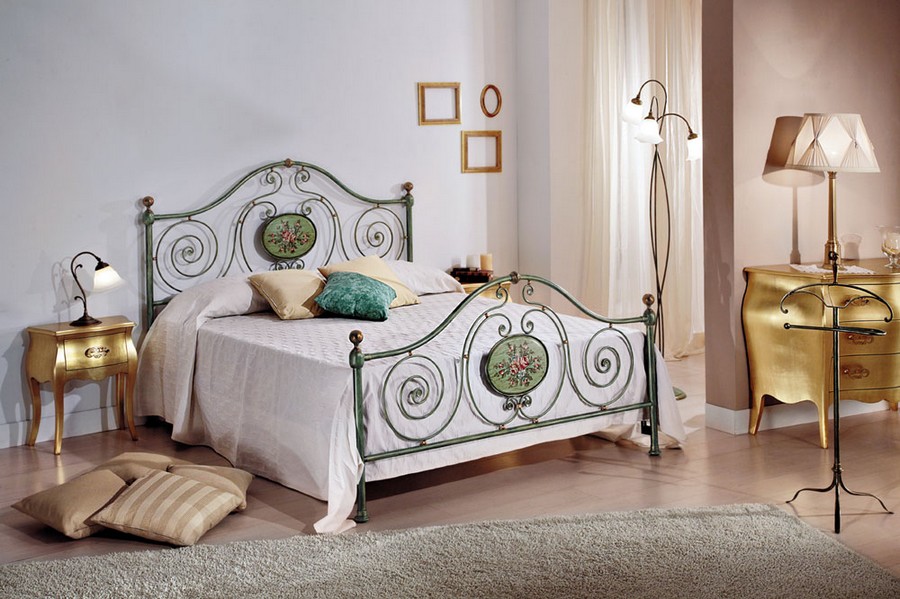
The wrought iron bed is one of the most beautiful and elegant pieces of furniture to choose for furnishing a classic bedroom. It is not only an irresistible decorative detail but, if chosen correctly, becomes the true protagonist of the room.
When opting for this type of furniture, it is essential to pay attention to the type of space being furnished—in this case, the bedroom—because a large bed could overwhelm the room, while a very simple model might lack impact. Colors and finishes of the other furnishings must also be considered, always aiming for stylistic coherence among all elements that define the bedroom.
When does the wrought iron bed date back to? Wrought iron structures for furniture already existed between the Renaissance and Baroque periods, when metal beds began to spread in aristocratic homes for both aesthetic and functional reasons. This is because iron is more hygienic, better resists pests, and allows for complex decorations, cutouts, scrolls, and floral motifs impossible to achieve with the same finesse in other materials. A wrought iron bed immediately evokes a sense of craftsmanship rare in furniture, recalling a time when metal was heated and shaped by hand to become a unique and instantly recognizable decorative object.
From a perceptual standpoint, wrought iron perfectly supports the language of a classic bedroom because it combines solidity, stability, and a sense of refinement. The structure is substantial and prominent, while the decorations, alternating voids and solids, give the overall piece lightness. The bed thus becomes a structural element that defines the space without weighing it down.
However, a distinction must be made between authentic wrought iron and its imitations. In the first case, the metal is heated, hammered, and bent by hand, with internal fibrosity that makes it strong yet ductile, capable of creating unique decorations and slight surface irregularities immediately perceived as artisanal details. Many contemporary iron beds, on the other hand, are structures with finishes imitating wrought iron but do not have the same identity as a true wrought iron bed.
Furthermore, a true wrought iron bed is built to last, and this idea of durability—both physical and symbolic—makes this material perfect and coherent with a traditional bedroom; a bed designed to withstand decades of use, that can be passed down, restored, or moved from one home to another without losing its identity. It is a unique element that unites history and daily life, capable of anchoring the bedroom to a recognizable aesthetic, never outdated, but always current.
The Ginevra double bed is designed for those seeking a classic and dramatic piece of furniture that immediately gives character to the bedroom. The headboard, often paired with a coordinated footboard, features soft scrolls and an elegant central medallion worked by hand, recalling the artisanal tradition of wrought iron and transforming the structure into an exceptional decorative element.
This model ensures full stability, solidity, and durability that goes far beyond current trends, while offering different color finishes, from dusty whites to warmer and more intense shades, to suit classic, romantic, or country chic bedrooms.
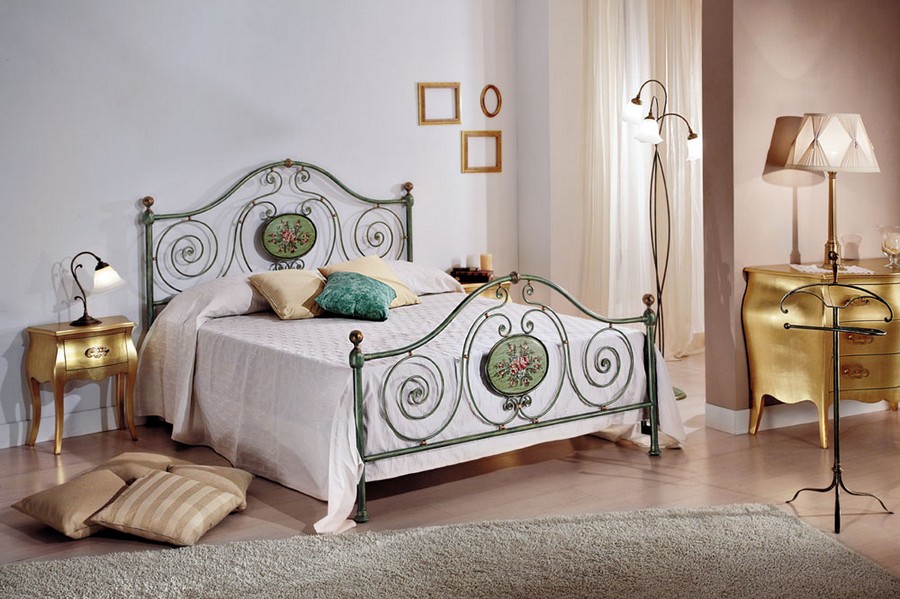
A quality wrought iron bed is primarily recognized by its structure, which must be made with solid iron or thick tubular profiles. This means robust sections capable of ensuring long-term stability, preventing bending, and minimizing creaking and vibrations during use. Another important indicator is weight. A true iron bed is generally heavier because more material and a more massive construction are used compared to a simple metal frame.
Another aspect concerns the joints. In well-made beds, the structural parts are joined with continuous and well-finished welds. Take a look at the weld seams; they should be smooth, uniform, and, when possible, integrated into the design, as rigidity and frame durability depend on them.
We must not forget the finishes. A quality bed does not rely on a single coat of paint but includes several treatments, such as anti-corrosion protection and the application of durable coatings. Details such as matte finishes, a slightly satin texture, antique effects, or patinas add an additional level of quality to the bed, but these are not merely decorative details—they reflect meticulous care in the process, resulting in a bed that is more durable, comfortable, beautiful, and welcoming.
In the chic classic style, wrought iron headboards with an essential design work well. We find models with subtly suggested arches, slightly shaped vertical bars, a few curls to highlight the center, and possibly matte finishes in shades of black, graphite, or warm ivory.
The keyword is discreet elegance. Decorations are present but understated, designed to harmonize with light paneling, minimalist wooden nightstands, or lamps with fabric shades. Symmetry is fundamental: bed in the center, two identical nightstands, two light sources, perhaps a painting or a mirror centered above the headboard.
The Aida double bed is designed for those who want a significant element in the center of the room, with a classic style that remains elegant over time. The headboard, often paired with a coordinated footboard, features harmonious scrolls and continuous curved lines that lighten the structure and give it a romantic yet orderly profile, perfect for classic, country chic, or traditionally inspired bedrooms.
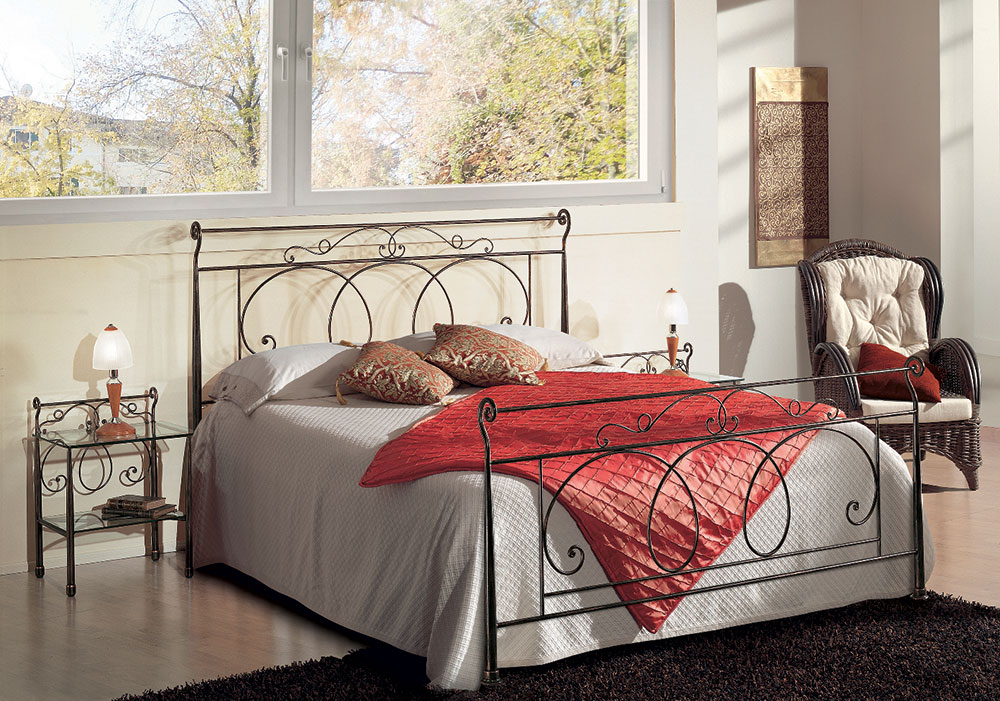
In the romantic classic style, such as shabby chic, the scrolls become softer and more embracing. Characteristic features include intertwined curls, stylized floral motifs, rosettes, and small decorative elements reminiscent of Liberty-style decoration. The headboard is defined by lines that create a softer visual rhythm, complemented by light fabrics, lace, draped curtains, and a palette of soft colors such as blush, cream, sage green, or powder blue. Essential decorative elements include cozy cushions, a throw at the foot of the bed, and small table lamps with worked metal bases that, if desired, echo the design of the headboard.
The Oriente double bed is designed for those who want a dramatic yet harmonious centerpiece for the room, with a design that emphasizes curved lines and visual continuity. The headboard features a series of sinuous curves that open up, creating a light and dynamic graphic effect, ideal for classic or romantic bedrooms where the bed becomes the true focal point of the room.
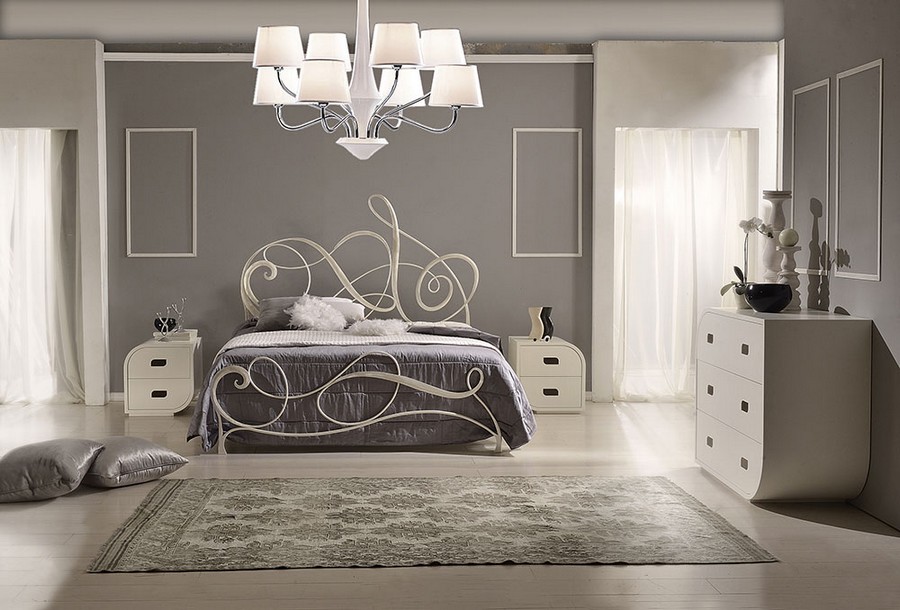
In the more decorative classic style, we find more substantial structures, such as high headboards, footboards, rich scrollwork, shell motifs, spears, garlands, and sometimes gold, bronze, or antique iron finishes. In this case, the bed becomes the true protagonist of the room. Supporting furniture includes heavy curtains, significant rugs, nightstands with details, and classic chandeliers.
Also read the guide on bedroom rugs
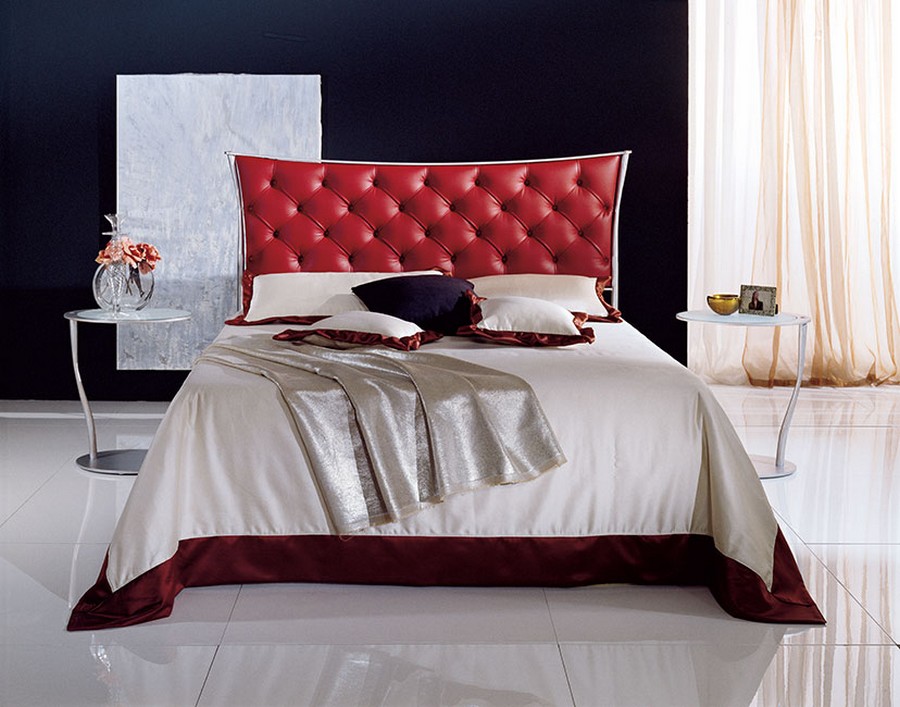
The Enea Capitonnè double bed is ideal for those who want to combine the solidity of solid iron with the softness of a classically inspired upholstered headboard. The structure is handcrafted with 100% solid iron, worked and welded by hand, while the headboard incorporates a padded panel with capitonné detailing upholstered in faux leather, adding visual and tactile comfort.
Available in a double version with headboard only, or with headboard, bed frame, footboard, and even storage variants.